Dehydrated Onion vs Fresh Onion: Why European Food Manufacturers Prefer Dehydrated Options
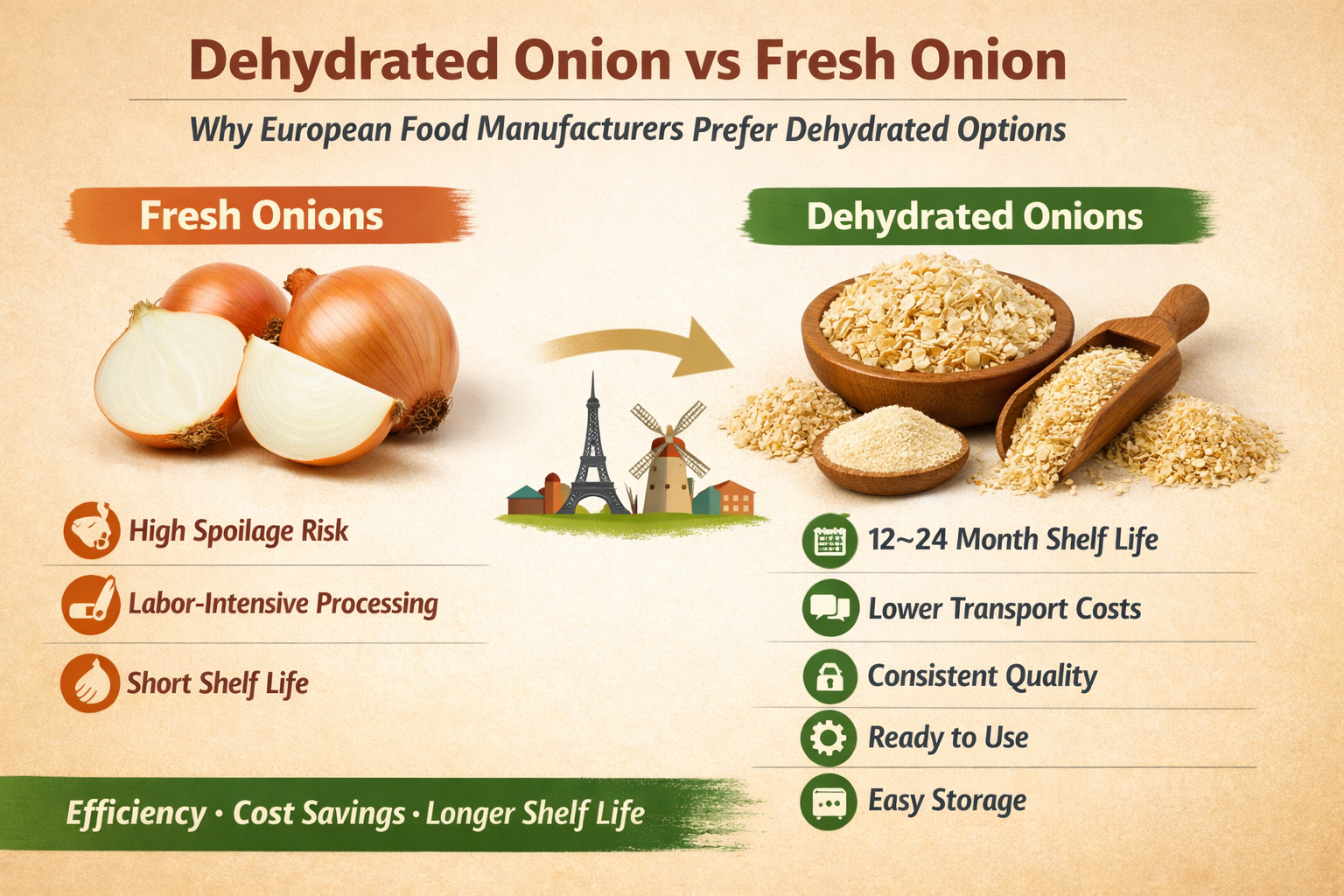
In today’s competitive European food industry, manufacturers are constantly looking for ingredients that offer consistency, cost efficiency, longer shelf life, and reliable supply. Onion is a core ingredient in sauces, ready meals, soups, snacks, meat products, and seasonings across Germany, France, the UK, Italy, Spain, and the Netherlands. While fresh onions have traditionally been used in food preparation, dehydrated onions are increasingly becoming the preferred choice for large-scale food production. Understanding the difference between dehydrated onion and fresh onion helps European buyers make better sourcing decisions for long-term business success.
Fresh onions contain high moisture content, typically around 80–90%, which makes them perishable and highly sensitive to storage conditions. They require careful handling, temperature-controlled storage, and fast usage to prevent spoilage. In contrast, dehydrated onions undergo a controlled drying process that removes moisture while preserving flavor, aroma, and nutritional properties. This significantly extends shelf life, often up to 12–24 months when stored properly. For European importers and manufacturers, longer shelf life directly translates into reduced wastage and improved inventory management.
One of the biggest advantages of dehydrated onion for European food manufacturers is cost efficiency. Fresh onions involve higher transportation costs due to weight and bulk, as well as potential losses from spoilage during transit. Dehydrated onions are lightweight and compact, reducing freight expenses and making international shipping more economical. For businesses importing from India to Europe, lower shipping weight means better container utilization and improved overall margins.
Consistency is another key factor driving the demand for dehydrated onions in Europe’s processed food sector. Fresh onions can vary in size, moisture, pungency, and quality depending on season and region. This inconsistency can affect taste and texture in finished food products. Dehydrated onions, available in forms such as flakes, chopped, minced, granules, and powder, offer uniform size and standardized flavor strength. This ensures batch-to-batch consistency, which is crucial for food brands maintaining strict quality standards.
Labor efficiency also plays an important role. Using fresh onions requires peeling, cutting, washing, and processing, which increases labor costs and preparation time. Dehydrated onions are ready to use and eliminate pre-processing steps, making them ideal for large-scale European manufacturing facilities focused on productivity and automation.
This convenience is especially beneficial in
high-demand sectors like ready meals, instant soups, snack seasonings, pasta sauces, and frozen foods.
Storage requirements further highlight the benefits of dehydrated onions. Fresh onions need ventilated storage and are vulnerable to moisture and microbial growth. Dehydrated onions require minimal storage space and remain stable under dry conditions, reducing the need for specialized infrastructure. For European distributors managing warehouse space efficiently, this becomes a major operational advantage.
Food safety and hygiene standards are particularly strict in the European Union. Dehydrated onion suppliers that follow international quality certifications and hygienic processing practices can meet EU compliance requirements more effectively than raw agricultural shipments. Controlled dehydration processes reduce microbial risks and improve product safety, which is a significant consideration for European importers.
From a sustainability perspective, dehydrated onions can also contribute to reduced food waste. Because of their extended shelf life and reduced spoilage, manufacturers experience lower disposal rates compared to fresh onions. Additionally, lighter shipping weight can lower transportation-related carbon emissions per usable kilogram of product, aligning with Europe’s growing focus on sustainable sourcing.
However, fresh onions still have importance in fresh culinary applications, restaurants, and retail markets where texture and raw usage are required. The choice ultimately depends on the application. For industrial food manufacturing, dehydrated onion clearly provides operational, financial, and logistical advantages.
In conclusion, while fresh onions remain essential for certain culinary uses, dehydrated onions offer superior benefits for European food manufacturers seeking efficiency, consistency, longer shelf life, and cost-effective international sourcing. As demand for ready-to-eat meals, convenience foods, and processed products continues to grow across Europe, dehydrated onion stands out as the smarter ingredient choice for scalable production and reliable supply chains.